Creating a Safe Sleep Space for Babies
Key takeaways:
- Put babies to sleep in their own sleep space. If you have multiples, they should each have their own space to sleep.
- Keep babies close. We recommend sharing a room, not a bed, with your baby for the first six months of their life.
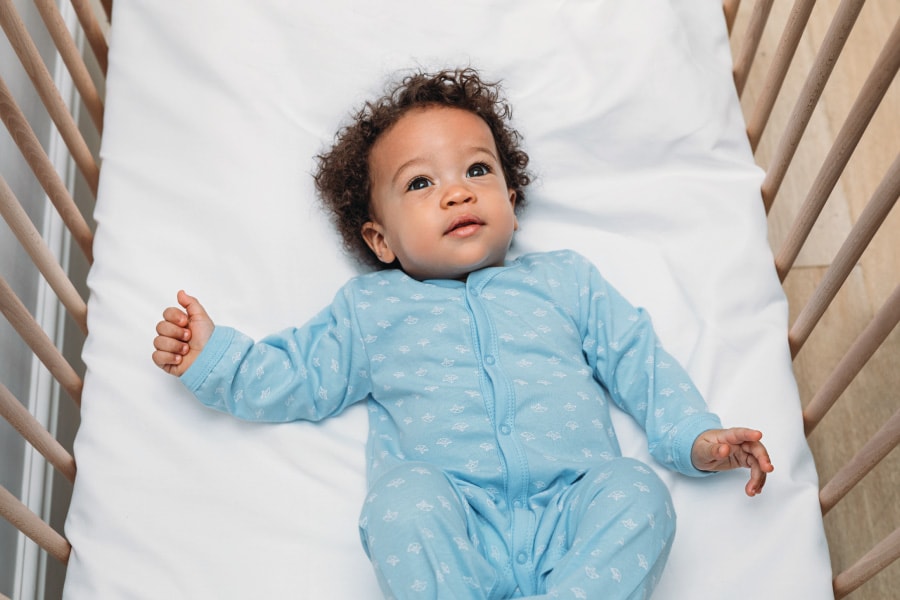
- Put babies to sleep on their back. Once they can roll over on their own, it’s OK to leave them on their tummy if they’re not swaddled. But always start them on their back.
- Make sure your baby’s sleep space is clear. All they need is a firm, flat mattress and fitted sheet. A properly fitting sleep sack and pacifier are OK.
In this article:
The basics of safe sleep
As a new parent, you want your infant to sleep comfortably. Your instinct may be to fill their crib with cozy things like blankets, pillows and stuffed toys. While older kids and grown-ups may enjoy these snuggly comforts, they are not safe for babies and may increase their risk for suffocation or strangulation.
To create a safe sleep space, you’ll want to:
- Start with a firm base. Whether it’s a bassinet, crib or pack ’n play, your baby should always sleep on a flat, firm surface. Avoid adding comfort items that make the mattress softer, like mattress toppers. In fact, the only thing you should place under baby is a fitted sheet sized so it’s tight to the mattress. If your little one falls asleep on something soft (like your chest, the sofa or an adult mattress) or at an incline (in their car seat, swing or carrier), move them as quickly as you can to a flat, firm surface.
- Keep it clear. Keep loose bedding, blankets, toys, lovies, pillows, crib bumpers and sleep positioners out of your baby’s sleep space. Pacifiers and properly fitting sleep sacks are OK.
- Avoid overheating.A common concern for new parents is that their baby may be cold while sleeping. But overheating has been linked to SIDS. In colder months, you can use a sleep sack for a little extra warmth. Do not use weighted or heavy blankets, which can be a suffocation risk. The newest recommendations state your baby doesn’t even need a hat once they leave the nursery!
- Secure items that could fall. Be sure to anchor furniture to the walls to avoid tipping and hang artwork up and away from your infant’s sleep space. This is especially important as your baby grows and can reach for and grab items hanging near their crib.
- Share your space, not your bed. Keeping your baby close at night may give you comfort, and it can make overnight feedings that much easier. But remember, the safest option for a baby is to sleep alone. So, rather than bringing them into your bed, simply bring their sleep space into your room. Set up a bassinet or crib nearby and take comfort in knowing they are close by and sleeping safely.
Crib accessories are popular, but are they safe?
Crib accessories are very popular, typically because they are stylish or claim to keep your infant safe. Many of these trendy items are hazards that can lead to suffocation or strangulation.
Are crib bumpers safe?
Research shows crib bumpers increase the risk of serious injury or death. Many babies are unable to pull away from a soft bumper pad, which can lead to suffocation, strangulation or entrapment. In fact, the Safe Sleep for Babies Act prohibits the manufacture and sale of crib bumpers in the United States.
Before crib safety was regulated, many parents used crib bumpers or bumper pads to prevent their baby from getting stuck between crib slats that were too far apart. Today’s cribs must meet strict safety standards, so crib bumpers aren’t necessary.
Are baby monitors safe?
Baby monitors are an important safety tool that give many new parents peace of mind. However, cords from baby monitors have been known to cause strangulation. If you decide to use a baby monitor, place it at least 3 feet away from any part of your baby’s sleep space. Never attach a baby monitor to the inside of the crib or on the rim or rungs.
The same rules apply to any items with cords. Ensure your baby’s sleep space is at least 3 feet away from drapes, blinds, lights or wall-mounted accessories that have cables attached.
Are crib mobiles safe?
Crib mobiles do not pose an inherent safety risk—if they’re installed and used correctly. Hang your mobile high enough that your baby cannot grab or pull on it, even after they’re able to stand up. Avoid any mobiles that have ribbons or strings that can cause strangulation.
What about new crib or sleep products on the market?
New products are constantly being marketed for safe sleep. No matter the product, it’s important to stay informed. The U.S. Consumer Product Safety Commission (CPSC) is a trusted source for information about safety recalls and hazards. Use their recall search tool to check the safety of your sleep space products, and sign up for their newsletter to get important safety information updates.
Is there a baby-safe paint for cribs?
If you are thinking about painting your baby’s crib, there are some important factors to consider.
- Check the ingredients. Many paints contain harsh chemicals that can be harmful to your baby’s health. When considering paint for your baby’s crib, it’s important to choose a product that’s nontoxic.
- Look out for lead. Fortunately, lead-based paint was banned in the U.S. in 1978. However, lead-based paint can still be found in millions of homes, either on the walls or furniture. Even small amounts of lead or lead dust can cause severe harm in children under the age of 6 . If you suspect your crib was painted with lead-based paint, be sure to strip it down to the surface and repaint it. While this may be a fun DIY project, consider working with professionals who are experienced in safely removing lead-based paint.
When choosing a baby-safe paint for your crib, check the label to ensure it’s:
- Free of VOCs (volatile organic compounds). VOCs are toxic gasses that are released when paint dries, causing that new paint smell. According to the Environmental Protection Agency (EPA), VOCs may cause eye, nose and throat irritation, headaches, nausea and liver or kidney damage.
- Free of APEs. Alkylphenol ethoxylates (APEs) are a group of chemicals that can disrupt the body’s natural hormonal process.
- Not “antimicrobial.” Antimicrobial paints contain preservatives that keep the paint fresh. This may sound like a good thing, but many of these paints also contain unnecessary additives that are harmful, especially to young people.
Creating a safe sleep space when traveling
Traveling with a baby can be tricky, but it’s just as important to create a safe sleep space on the go as it is at home. Keep these tips in mind while traveling:
- Take the rules of safe sleep with you. Traveling often means shifting routines and disrupted sleep schedules. Be sure to practice safe sleep for babies no matter where you are or where your little one is sleeping.
- Find out what’s available. Many hotels and vacation rentals can provide you with a crib or pack ’n play. Call ahead to find out what options are available, and ask if you can add one to your reservation. If you’re visiting family or friends, find out if anyone has a bassinet, crib or pack ’n play you can borrow during your stay.
- Take your safe sleep space on the road. If you’re traveling by car, bring your safe sleep space with you! Whenever possible, your crib is the best option. A pack ’n play is a good alternative when space is tight.
Read on to get answers to your most popular safe sleep questions.
Safe sleep space FAQs
Is it safe for babies to sleep on their stomach? When is it safe for babies to sleep on their stomach?
Babies under 1 year of age should always sleep on their back. This reduces the risk of SUID and SIDS. Once your baby is able to roll over on their own and is no longer swaddled, it’s OK to leave them on their tummy. But lay them down on their back to start.
Are pack and plays safe for sleep?
The short answer is yes! Just like cribs, portable play yards are fitted with a flat, firm mattress in the bottom, which is a perfect sleep surface for a baby. If you like, you can use a fitted sheet, but avoid soft items like blankets during sleep time.
Is it safe for babies to sleep with a pacifier?
Using a pacifier has been proved to reduce the risk of SIDS. The AAP recommends offering one at night and during naps. The pacifier can be loose in their crib. To minimize the risk of strangulation, never clip a pacifier to a baby’s clothes or hang it from the crib.
How should I dress my baby for sleep?
Dress your baby lightly for sleep (overheating has been linked to SIDS). Set the room temperature in a cool range that’s comfortable for a lightly clothed adult. If they need an extra layer in colder months, use a sleep sack as a safe alternative to blankets. The latest recommendations state that babies should not wear hats during sleep time once they’re home from the nursery.
If your child has an injury or is showing signs of illness, call your doctor or visit an urgent care center. If your child has a life-threatening injury or illness, is having trouble breathing or is unconscious, call 911 and/or visit an emergency department immediately.