How to Prevent Drowning With Layers of Protection
The reality: Drowning is the leading cause of death in kids ages 1 to 4 and can happen in just 30 seconds in as little as 1 inch of water.
The good news: Drowning is preventable.
In this article:
Drowning is preventable
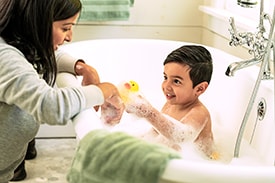
Whether it’s bathtime or a pool day, here are 5 ways to make drowning prevention a priority when kids are in or around water:
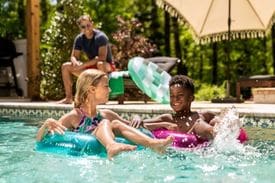
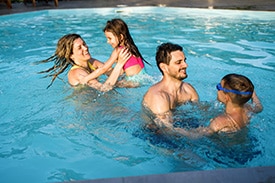
- Supervision: The most important thing you can do to keep kids safe in and around water is actively supervise them. Keep babies, young children and beginner swimmers within arm’s reach. Keep an eye on older, more confident swimmers without distractions.
- Barriers and alarms: Most toddler drownings occur during non-swimming times when kids unexpectedly access water. Installing 4-sided pool fences and alarms can help reduce this drowning risk.
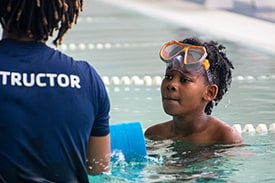
- Swimming lessons: No one is born knowing how to swim. By taking swimming lessons as young as 1, kids can significantly reduce their drowning risk.
- Life jackets: Children and adults alike should always wear a U.S. Coast Guard (USCG) tested and approved life jacket in or around natural bodies of water and when boating, or if other safety measures aren’t in place.
- CPR/emergency preparedness: During times when your child is in or around water, knowing emergency preparedness skills can save their life. You never know when you’ll be the only supervisor (bathtime, lake trips, backyard pools, etc.) and need to put these lifesaving skills into action.

Supervision
Whenever kids are in or around water, make sure someone is supervising them. This looks like:
- Keeping your infant, toddler, or any child who isn’t a confident swimmer, within arm’s reach always.
- Keeping an eye on older kids—even if they’re strong swimmers.
- Making sure only trusted adults are responsible for supervising kids. Don’t task older siblings with supervision.
- Actively supervising. If we’re talking with friends, reading a book, texting or scrolling social media, we can’t focus on safety.
- If you need a break, confirming that another trusted adult is taking over responsibility for supervising your child rather than assuming someone else is watching. Ask them directly, “Are you watching Sam? I need to run to the restroom.”
- Ensuring that older kids and teens, who are competent swimmers without adult supervision, swim in a buddy system. No one, even strong swimmers, should ever swim alone.
- Having a water watcher: a responsible adult who agrees to constantly supervise kids when in and around water without distractions. Water watchers can take shifts so the designated watcher says alert.

Barriers and alarms
The majority of toddler drownings occur during non-swim times, when children unexpectedly access water (e.g., backyard pools). And infants are most likely to drown at home, particularly in bathtubs, buckets, dog bowls and even toilets. Barriers and alarms, like the measures listed below, are great ways to add drowning prevention layers to your home. Try adding:
- Four-sided pool fences: According to the National Drowning Prevention Alliance (NDPA), four-sided fencing reduces a child’s drowning risk by 83%.
- Pool safety covers: Covers are another way to physically stop people from getting in a pool unsupervised.
- Alarm systems: Families can install alarms on windows, doors, gates and the pool to warn them if someone goes in or near the water outside of swim times.
- Toilet seat lid locks: Installing toilet seat lid locks, keeping bathroom doors shut and using childproof doorknob covers can help reduce toddler and infant drownings in the home.
Remember that barriers and alarms are an extra layer of drowning prevention and nothing replaces close, constant and capable supervision.

Swimming lessons
We’re not born knowing how to swim, making swimming lessons critical for drowning prevention. While swimming lessons don’t make someone “drown proof,” they do reduce the drowning risk for children ages 1 to 4 by 88%. Use our guide to swim lessons for babies, kids and teens as a starting point.
At minimum, swimming lessons should:
- Fit your child’s development level.
- Have CPR and First Aid certified instructors.
- Focus on swim skills and being safe in and around water.
- Teach kids what to do if they fall into water.
- Have instructors in the water.
- Be continuous and not limited to one season to help kids’ skills stay sharp.
Remember that knowing how to swim is an extra layer of drowning prevention and nothing replaces close, constant and capable supervision. Also know it's never too late to learn how to swim!
Life jackets
Wearing a U.S. Coast Guard (USCG) tested and approved life jacket provides an extra safety measure, especially when other layers of drowning prevention are not in place (i.e., not having a lifeguard on duty).
A life jacket:
- Should be worn when in or around natural bodies of water and when boating.
- Should be worn before someone enters the water.
- Needs to be fastened and zipped when on a boat and in/around open bodies of water.
- Is safer than and should be used instead of puddle jumpers, water wings and other floaties.
- Should be USCG tested and approved and meet accepted industry standards. Not all life jackets sold by retailers are tested and approved by the USCG and therefore are not all safe.
- Should not ride up above the ears. If it does, it’s too big.
Remember that a life jacket is an extra layer of protection and nothing replaces close, constant and capable supervision.

CPR/emergency preparedness
There may be times when your child is in or around water without a CPR-trained lifeguard present (e.g., bathtime, lake trips, beach trips, backyard pools, etc.). You need to know various emergency preparedness skills, including:
- Calling 911: Keep a phone nearby (but put away when supervising children) when you’re in or around water to call 911. Avoid swimming in remote places that lack cell service. Note that calling from a cell phone won’t always inform the operator of your location.
- Knowing CPR: Learning and practicing CPR is especially important for families who are frequently in or around water. At least one person present during swim time should be CPR trained. Also make sure that all caregivers and babysitters are CPR trained and certified (training and certification should be updated every 1 to 2 years).
- Taking safety courses and having rescue equipment: Anyone who owns and operates a pool should take local water safety courses that teach rescue skills. All pools should have rescue equipment.
- Finding a missing child: If a child you’re responsible for goes missing, always check the pool and other areas containing water first. Call 911 if you can’t immediately find the child.
Remember that emergency preparedness skills are an extra layer of drowning prevention and nothing replaces close, constant and capable supervision.
More resources
- Advocate Children’s Hospital: Protecting Kids from Water & Drowning Hazards
- Akron Children’s: Safest swimsuit colors
- American Heart Association: CPR and First Aid
- American Red Cross: Debunking dry drowning
- NDPA: Safety checklists
- NDPA: 5 Layers of Protection
- NDPA: Supervision/water watcher
- NDPA: Barriers and alarms (fencing, gates, latches, pool covers)
- NDPA: Water competency
- NDPA: Life jackets
- NDPA: Emergency preparation
- Stop Drowning Now: Drowning statistics
- USCG: Approved life jackets
- YMCA: Puddle jumpers