Tucked in Safe: Choosing the Right Sleep Sack
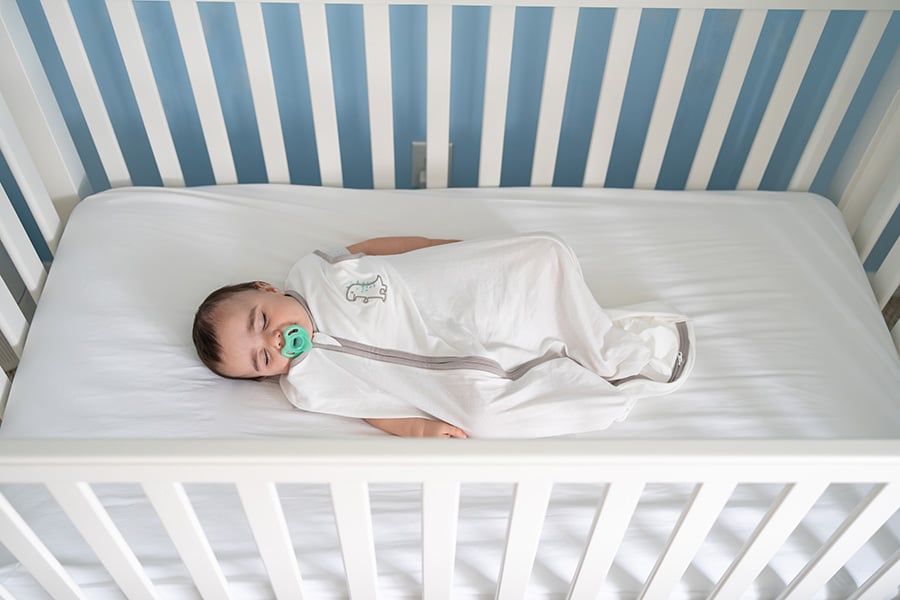
When it comes to safe sleep for infants, we can feel overwhelmed by information overload. We hear, “Don’t let babies get too hot, or too cold, or too uncomfortable, or even too comfortable.” When did parenting become a Goldilocks narrative?
Luckily, we’re here to calm the noise. Children’s Healthcare of Atlanta’s Emergency Medicine physician Sarah Lazarus, DO, reminds us, “The simplest sleep environment is the safest sleep environment.” Best of all, those scary sleep-related injuries that keep us up at night are preventable.
So, if sleep safety feels stressful, start here:
- Learn our evidence-based way to create a safe sleep space for your baby.
- Continue reading to find the safest and most comfortable way to dress your baby for sleep.
- Take a deep breath. Remember that parenting is hard but you’re capable. Don’t forget to take care of yourself, too.
In this article:

What is the safest way to dress my baby for sleep?
Snug as a bug in a sleep sack—at least that’s how we believe the saying should go! Unlike loose blankets, a sleep sack is the safest way to dress babies for sleep. These “wearable blankets” protect against sudden unexpected infant death (SUID) by:
- Preventing suffocation. Sleep sacks fasten at the top of the chest to prevent material from covering the airway.
- Maintaining comfortable sleeping temperatures. They come in a variety of fabrics to keep your baby warm or cool enough at night. Most products also come with a Thermal Overall Grade (TOG) Chart to show you the warmth rating of that specific sleep sack.
- Allowing safe movement. Sleep sacks have arm holes to give babies more mobility in case they get into unsafe positions.
But before you make your sleep sack purchase, know not all of them are safe.
Are weighted sleep sacks safe?
The short answer: no.
While sleep sacks are the safest clothing option for infant sleep, some on the market pose life-threatening risks. According to the Centers for Disease Control and Prevention (CDC), products labeled “weighted”—including weighted sleep sacks, sleepers, swaddles and blankets—are not safe for babies.
Weighted sleep products are advertised to reduce the startle reflex and keep babies asleep. While the idea of having a soundly sleeping baby seems dreamy, Dr. Sarah Lazarus says, “It is normal and developmentally appropriate for infants not to sleep through the night—that degree of alertness is actually required for infants to be arousable and decreases the risk of sleep-related deaths.”
More specifically, the risks of weighted sleep products include:
- Accidental Strangulation and Suffocation in Bed (ASSB)—one of the causes of SUID.
- Breathing and heart rate complications from too much pressure on their chests.
- Aspiration risks from beads falling out of weighted products and entering the nose or mouth.

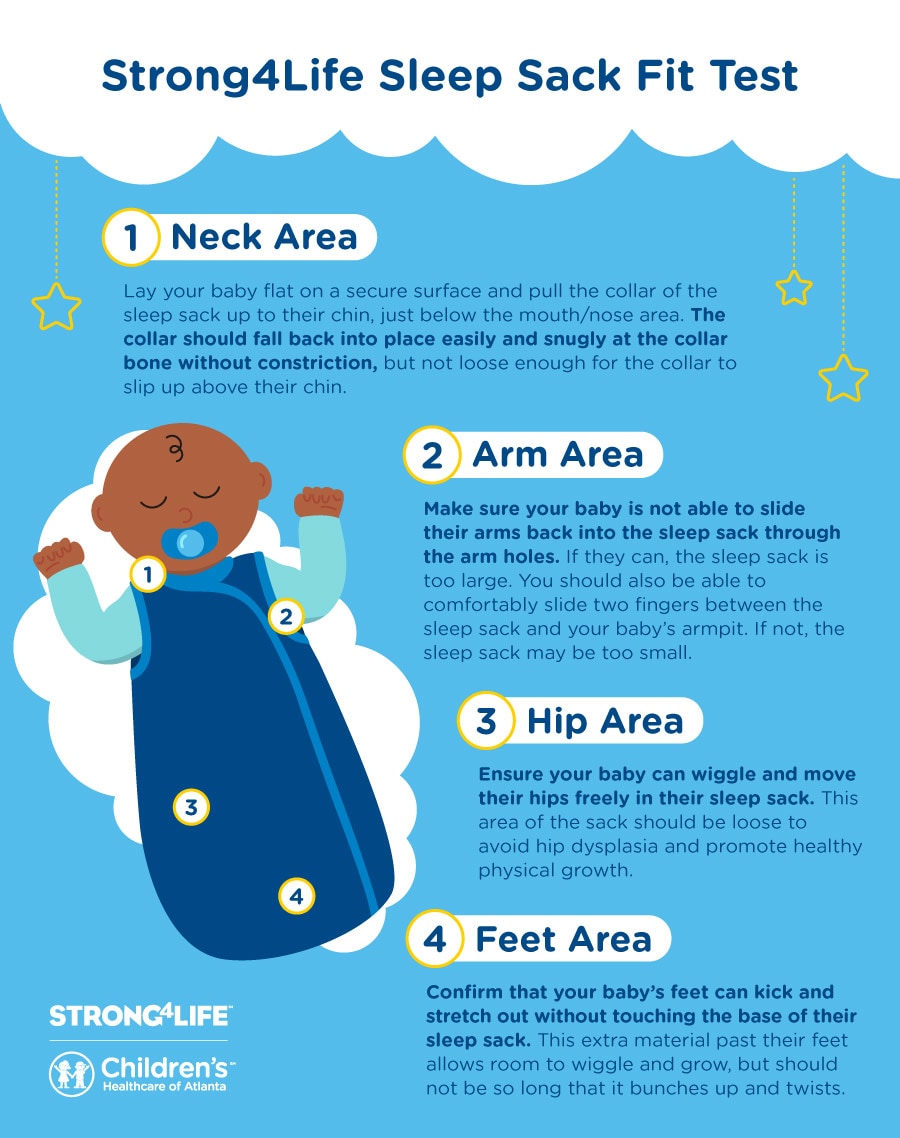
How do I know if my baby’s sleep sack fits properly?
Traditionally, sleep sacks have weight and age recommendations on their packaging. While we suggest using those numbers as your primary guide, you might be in a situation where:
- You no longer have the original sizing chart for your baby’s sleep sack, whether that’s because the sleep sack is a hand-me-down, or the packaging got lost or thrown away.
- Your baby, despite their age or weight, is a little longer or shorter than average, making sizing confusing.
- Despite your sleep sack’s sizing chart, you’re still not confident the sleep sack fits properly. We understand—a second opinion never hurts.
Try using Strong4Life’s basic fit test to ensure your baby’s sleep sack fits properly:

When do babies start and stop wearing sleep sacks?
“The great thing about sleep sacks is that they can be used for any age and stage,” says Dr. Sarah Lazarus. Since sleep sacks are safe and allow babies to comfortably wiggle and roll, letting children wear them into their toddler years is totally acceptable.
When it comes to swaddling, however, there is a more important timeline to pay attention to. “Once you see signs that your baby is getting close to rolling, it’s important that their arms remain out and are not wrapped in a swaddled position,” continues Dr. Sarah Lazarus. Having their arms free helps babies easily reposition themselves if they were to roll onto their stomachs. Be sure to transition away from swaddling once you see signs of rolling.
To save money, time and stress, consider investing in transitional sleep sacks. “My favorite sleep sacks allow you to swaddle arms in or arms out and have different sleep sacks for different ages and developmental stages,” says Dr. Lazarus. This includes sleep sacks that unsnap at the feet as babies grow taller. This way, you won’t be buying a new sleep sack every few months.
What can babies wear under sleep sacks?
The temperature of the room your baby sleeps in is the determining factor for what they wear under their sleep sack.
First, refer to the TOG rating of their sleep sack to determine which clothing would be most appropriate. However, if you’re still uneasy, you can lean on these signs:
- Signs babies are overheating include flushed skin, their chest feeling hot to the touch and sometimes sweating (many times infants do not sweat).
- Signs babies are too cold include the appearance of bright red skin, cold skin, bluish discoloration of the limbs and very low energy.
If your baby continues to show signs of being too hot or cold even after adjusting clothing layers and environmental factors, or if they have additional symptoms, please seek medical attention.
You know what’s best for your baby
While many parents know that sleeping consistently (for both you and the baby) can be complicated, sleeping safely doesn’t have to be. If you’re struggling with infant sleep routines, check out sleep tips from Strong4Life or talk to your pediatrician. Otherwise, remember these 3 simple checks to keep your child safe:
- Create a safe sleep space for your baby.
- Dress your baby for sleep safely by asking yourself the five questions above.
- Take care of yourself. We can’t pour from an empty cup—managing stress has a positive impact on our parenting.
At the end of the day (and beginning of the night), you know what’s best for your baby and how they sleep. Just remember to keep sleep simple and safety will follow.