Boat Safety for Families
Water safety reminders:
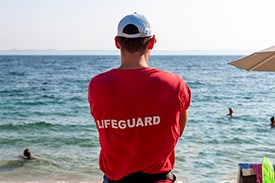
- Drowning is typically silent, so active supervision is the most important thing you can do to keep kids safe.
- Designate at least one adult to be a water watcher.
- Keep beginner swimmers within arm’s reach, and keep experienced swimmers in sight at all times.
- Watch kids during transition points when they aren’t supposed to be in the water and drowning accidents are more likely.
- Avoid replacing active supervision or swimming skills with a life vest or puddle jumper.
In this article:

Boating and swimming supervision
Supervision is key in keeping kids safe on and near boats.
- Keep close, constant watch. Supervising kids and teens means being able to recognize when they’re having trouble in the water and knowing who or how to call for help.
- Require kids to swim or drive a boat with a buddy. This makes it more likely that someone will see an incident as quickly as possible. Depending on the situation, they can step in to support or call for help.
- Monitor kids playing in the water without distractions, like reading, texting or scrolling. If you’re socializing, be sure to face the direction in which the children are swimming.
- Choose a water watcher: a responsible adult who agrees to constantly supervise kids when in and around water without distractions.
- Take shifts with other water watchers when supervising to avoid exhaustion and distractions.
- Confirm another trusted adult is taking over responsibility for supervising rather than assuming someone else is watching. Ask them directly, “Are you watching Aaron? I need to check on Emma.”
- Watch kids during transition points (periods when they aren’t supposed to be swimming) when drowning accidents are more likely.
- Stay close enough to less experienced swimmers to reach out and grab them if needed (i.e., within arm's reach). Stronger swimmers still need to be watched at all times.
- Do not put older kids in charge of younger kids around water. Even if they’re a strong swimmer, little ones should be supervised by an adult.
For boat operation laws for states other than Georgia, visit the U.S. Coast Guard’s website. Learn more about supervision and other ways to protect kids and teens in and around water.
Georgia's boat operation laws
Whenever boating in the state of Georgia, be sure to follow these boat operation laws:
- Make sure there is a competent adult on board (someone 18 or older who is sober and has a boater’s license).
- Do not let kids 12 years or younger to operate a vessel longer than 16 feet.
- Accompany children 12 years and younger if they’re operating a vessel shorter than 16 feet that is either non-motorized or powered by a motor of 30 horsepower or less.
- Accompany kids and teens between 12 and 15 years old if they’re operating a vessel that’s shorter than 16 feet (including a personal watercraft or jet ski) and only let them operate it if they’ve passed a boat education course approved by the Department of Natural Resources (DNR).
- Allow teens 16 years and older to operate boats in Georgia waters only if they:
- Have proper identification on board (a boater’s license).
- Passed a boater education course approved by the DNR and have the card on board to operate any vessel.
- Slow to idle speed when you're within 100 feet of docks, piers, bridges, shorelines or people in the water.
Boat safety reminders
Whether you’re with your infant or child on a boat, or allowing qualified teens out on the water on their own, keep these boat safety tips in mind:
- Talk about risk-taking behavior. Older kids and teens are more likely to drown in open water because they’re taking risks. Risky behaviors include jumping and diving, swimming or boating at night, and swimming while under the influence of alcohol or drugs. Peer pressure plays a part. Talk to your child about how certain behaviors can be life threatening. Empower them to make the right decisions under pressure.
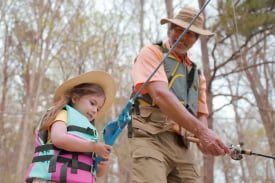
- Wear a U.S. Coast Guard (USCG) tested and approved life vest while on board a boat. The USCG requires kids to wear a life vest in a moving boat until age 13, even if they are a strong swimmer. We recommend everyone on a moving vessel wear a life vest at all times. Life vests should be appropriate for your child’s size, and fit snugly and securely, without riding up above their ears. If it does, it’s too big. When your child is on the boat, fasten all straps and zippers on their life vest.
- Ensure motorized, recreational boats have Marine Type USCG Approved fire extinguishers on board.
- Hold babies in your lap on the boat. Make sure you both have a properly fitted life vest on.
- Check the capacity plate of your boat for the indicated maximum weight or number of people that it can safely carry.
- Follow these National Safety Council boat safety tips while skiing, tubing and taking part in other water sports::
- Teach kids and teens how to get up and out of the water, and how to safely use the tow rope.
- Have a spotter or water watcher, and go over basic hand signals to communicate across the water.
- Make sure the towline isn’t caught in the boat’s propeller or tied around riders before getting underway.
- Avoid getting back on the boat until the propeller has stopped.
- Stay aware of and clearly visible to boaters and other watercraft operators, whether you’re driving a boat or swimming.
- Avoid swimming or floating near a boat’s exhaust outlets, as there’s a risk of carbon monoxide poisoning.
- Ensure all passengers are out of the water and back on board before starting the boat engine. This helps prevent anyone getting caught in a turning propeller.
- Operate boats, jet skis and other watercrafts sober. Abstain from any substances that would impair your ability to drive. Boat operators need to be as vigilant as a designated driver.
When it comes to swimming in open water, remind kids and teens to keep these freshwater safety and beach safety tips in mind, too. For more general water safety reminders, check out our top five drowning prevention tips.
If your child has an injury or is showing signs of illness, call your doctor or visit an urgent care center. If your child has a life-threatening injury or illness, is having trouble breathing or is unconscious, call 911 and/or visit an emergency department immediately.