Parenting Through Emotional Dysregulation

If any of the following phrases sound familiar, you may be entitled to an article’s worth of parenting validation:
- “I’m going to count to 3…”
- “I’m losing my patience.”
- “Watch your tone.”
- “We don’t talk to grown-ups like that.”
We see you and we hear you! Parenting has its highs and lows. And during the emotional lows, it’s easy to think, “I’m a bad parent,” or to feel the need to stay perfectly calm and say the right thing. While those thoughts and feelings are valid, they’re not true.
Children and adults alike experience emotional dysregulation. While it’s our job to teach our children emotional regulation skills, it’s not our job to do it perfectly—because it’s impossible to do it perfectly. Rather, the goal is to respond in a safe and nurturing way so that children can learn from our example.
In this article:
What is emotional dysregulation?
Emotional dysregulation is when our feelings get so big that it’s hard to think, listen or make good choices. When we’re dysregulated, the “feeling part” of our brains has taken over while the “thinking part” of our brains is practically offline. That’s why logic and reason don’t feel helpful in the heat of the moment.
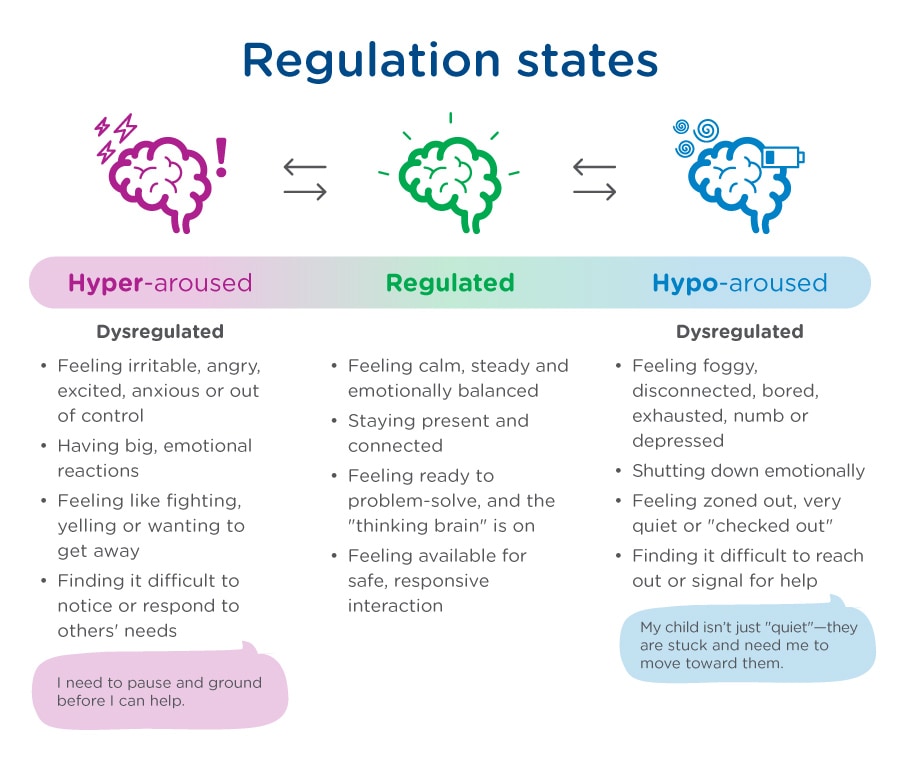

First: Regulate yourself before responding
Key takeaway: We can’t co-regulate with a child if we’re feeling dysregulated ourselves. By calming ourselves first, we can then respond to our kids.
Here are some practical steps to regulate yourself in the moment:
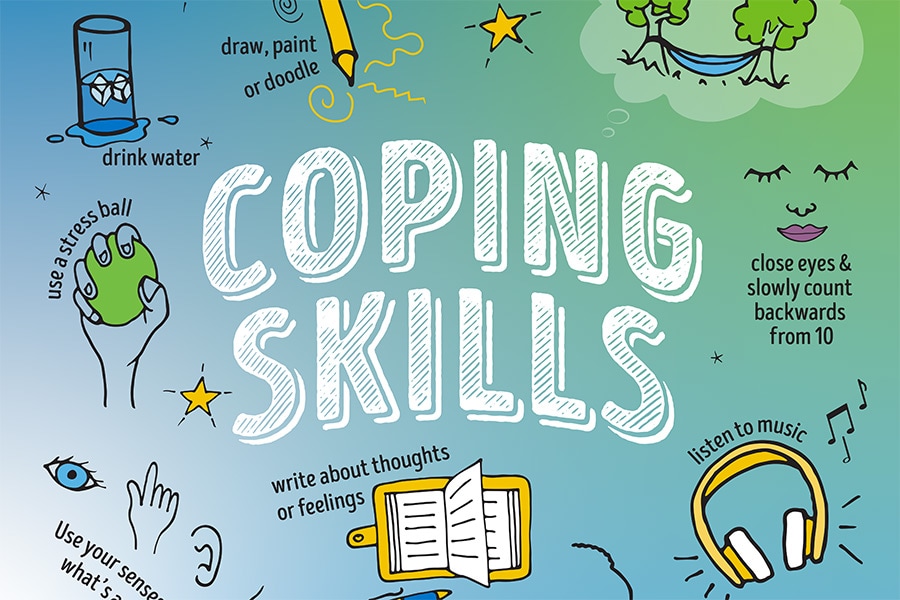
- Pause and notice your thoughts
- You might be thinking, “They’re giving me a hard time. Why are they being so difficult?” Instead, try thinking “They’re having a hard time, and they need my help.”
- Do one, quick calming activity:
- Feel your feet flat on the floor and press down.
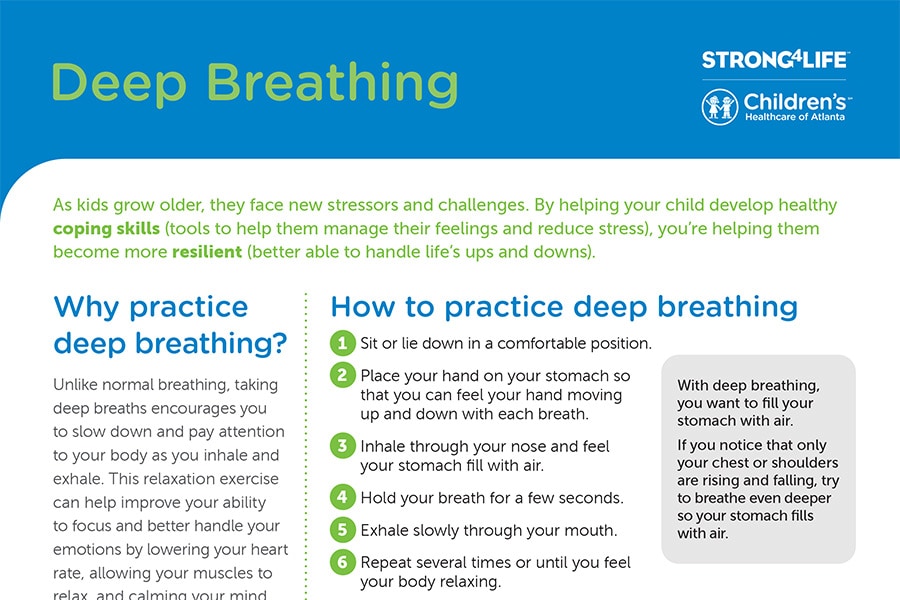
- Take 1 to 3 slow, deep breaths.
- Relax your jaw and shoulders.
- Lower your voice and body:
- Kneel or sit to be more at your child’s level.
- Soften your tone and facial expression.
This might feel easier said than done at times, and that’s OK. Nobody is perfect. Co-regulating with a child who is overwhelmed is about approaching the moment with safety and stability, not perfection.

Second: Respond using these four steps
Key takeaway: When your child feels dysregulated, pause to notice what’s happening to them, acknowledge their feelings, move toward safety and then calmly engage.
We can’t control where or when our children will experience emotional dysregulation, but we can control our response. Try using these four simple steps:
1. Notice what’s happening (in your child and in you).
- Notice signs of dysregulation in your child (e.g., crying, yelling, hitting, shutting down).
- Notice signs in yourself (e.g., tight chest, urge to yell, feeling panicky or checked out).
2. Acknowledge feelings.
- Keep words short and concrete.
- Focus on naming the feeling, not arguing about the behavior.
| Instead of... | Try... |
|---|---|
Arguing about the behavior (e.g., “Calm down right now.”) |
Naming the feeling (e.g., “You’re really mad that we have to leave.”) |
Demanding a behavior (e.g., “Use your words”). |
Acknowledging the feeling (e.g., “This is really disappointing.”) |
Lecturing or asking lots of questions in the middle of the meltdown. |
Staying present and noticing what’s happening to your child (e.g., “Your body is showing me this feels too big right now.”) |
3. Move toward safety (physical and emotional).
-
Physical safety:
- Gently prevent harm (e.g., move objects, block hitting if needed).
- Try saying:
- “I’m going to move this away so no one gets hurt.”
- “I won’t let you hit. I’m going to hold your hands to keep us safe.”
-
Emotional safety:
- Soften your voice, face and body language.
- Stay close if your child wants you near; offer space if they pull away but remain available.
- Try saying:
- “You’re safe. I’m right here.”
- “I’m not mad at you. We’ll get through this together.”
4. Engage with simple support until their body settles.
It is important to give options for support and not force anything the child may not want in the moment.
-
Use presence more than words.
- Sit nearby.
- Offer a hug or gentle touch.
- Offer a comfort item (e.g., stuffed animal, blanket, fidget).
-
Try saying:
- “I’m here.”
- “Your feelings are allowed.”
- “We can take a break together.”
-
As the child begins to settle (breathing slows, intensity drops), try saying:
- “Do you want a hug or some space?”
- “Do you want to sit on my lap or next to me?”
Third: Reflect and learn from the interaction
Key takeaway: Reflecting and learning from our challenging interactions allows for us to think about how to do things differently the next time and teach coping skills to better manage dysregulation in the future. Once you and your child are feeling more regulated, try these steps:
1. Naming what happened without shame.
- “You were really upset when it was time to leave the park.”
2. Validating the feeling.
- “It’s hard to stop something fun. That makes sense I feel that way sometimes, too.”
3. Teaching one small skill or option for next time.
- “Next time, when you feel angry, try taking a deep breath like we have been practicing and say, ‘I’m mad!’ instead of hitting.”
- Questions you can ask to create a teaching moment:
- “What did your body feel like when you got so upset? When I get upset, sometimes I feel my heart beat faster.”
- “What could we try next time when emotions feel really big?”
- “How can I help you calm your body?”
- “What’s one thing I can do to help you next time?”
Giving yourself and your child time to calm down and turn your “thinking brains” back on makes you both better able to receive help and learn coping skills for the future.

When you’re too overwhelmed to help
Key takeaway: It’s OK to feel too overwhelmed to help in the moment. You can step away and return to reconnect and repair the relationship later.
It’s OK for parents to feel too overwhelmed to be the “steady” one in heated moments. When this happens to you, make a plan:
1. Ensure that your child is physically safe.
2. Take a brief break if needed.
- Try saying: “I’m feeling really overwhelmed. I’m going to step into the other room for one minute, and then I’ll come back.”
3. Return and repair the relationship.
- Try saying: “I’m sorry I yelled. You are not responsible for my big reaction. I am responsible for how I react, even when I feel overwhelmed. I’m working on how I express my feelings, too—it’s something we all work on our whole lives.”
Just because we’re adults doesn’t mean we won’t experience big feelings, too. Briefly taking space from our kids allows us to show up calmer and more present in the long run. It also models to kids that it’s OK to step away to calm down during heated moments.
Practice over perfection
As parents, we won’t get it right every time, and that’s OK. Just remember that every attempt to pause, notice, acknowledge and move toward safety and connection will help build:
- Your child’s emotional regulation skills.
- Your parent–child relationship.
- Your own capacity to stay present in hard moments.
Parenting is hard and it’s OK to ask for help. Don’t hesitate to reach out to a mental health professional for support and guidance. Call 988 if you or loved one are experiencing a mental health crisis.