Age-Based Emotional Regulation Skills for Kids
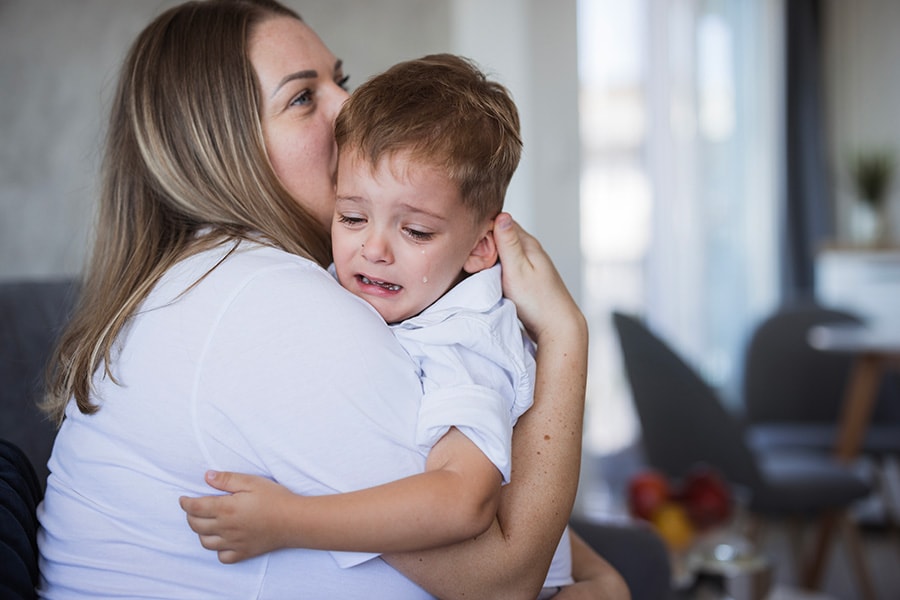
Parenting is an ever-evolving role. One day you’re drying tears at school drop-off, then suddenly you’re validating their pre-test anxiety before the SATs. And just as our role as parents evolves, so will the emotional needs of our kids as they get older and become more independent.
In this article:
Supporting our kids emotionally paves the way for them to eventually regulate emotions on their own in the future. To help kids do this we have to understand four things:
- We are responsible for teaching our kids emotional regulation skills as safe, stable, and nurturing adults in their life.
- While it’s most effective to build emotional regulation skills starting at birth, the good news is it’s never too late to teach these skills.
- We want to encourage kids to find coping strategies that work well for them as they get older and become more independent.
- We need to be patient and offer guidance and support along the way, just as we do with other skills they learn.
Once we understand this, we can then use the following age-based coping skills for kids whenever we need them.
Emotional regulation skills for infants
Babies cannot yet regulate their emotions, so they fully rely on caregivers for this. Here are some emotional regulation skills you can try with your infant.
| Strategies | Skills |
|---|---|
Follow predictable routines: Knowing what to expect creates a sense of safety, which often reduces anxiety for children. |
|
Use foundational communication skills: These foundational language strategies will help them identify and express their own feelings and needs in the future. |
|
Create soothing sensory experiences. Calming sights, sounds and smells can help babies feel calmer. |
|
Practice self-care: Making time to intentionally care for ourselves during the highs and lows of parenthood can help reduce everyday stress. A calm presence in us can help babies calm their own nervous systems. |
|
Emotional regulations skills for toddlers
Toddlers experience big feelings and still rely on frequent caregiver comfort. Here are some emotional regulation skills you can try with your toddler.
| Strategies | Skills |
|---|---|
|
Regulate yourself, then respond to your toddler. Toddlers learn how to handle big feelings by watching adults. |
|
|
Label emotions during play. Naming feelings helps toddlers build their emotional vocabulary as they grow. |
|
|
Practice skills together now that they can do on their own later. We teach and model emotional regulation skills so kids can observe and adopt these skills over time. |
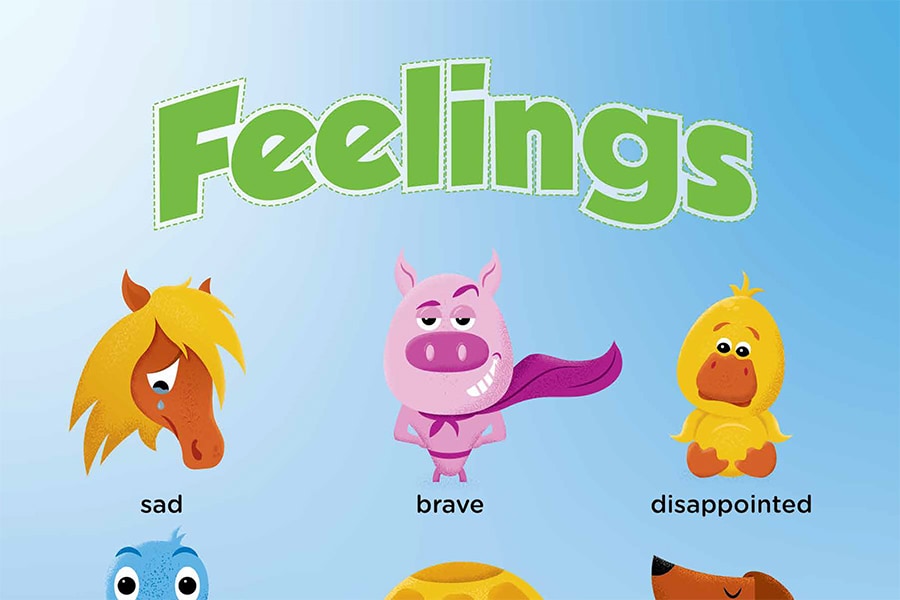
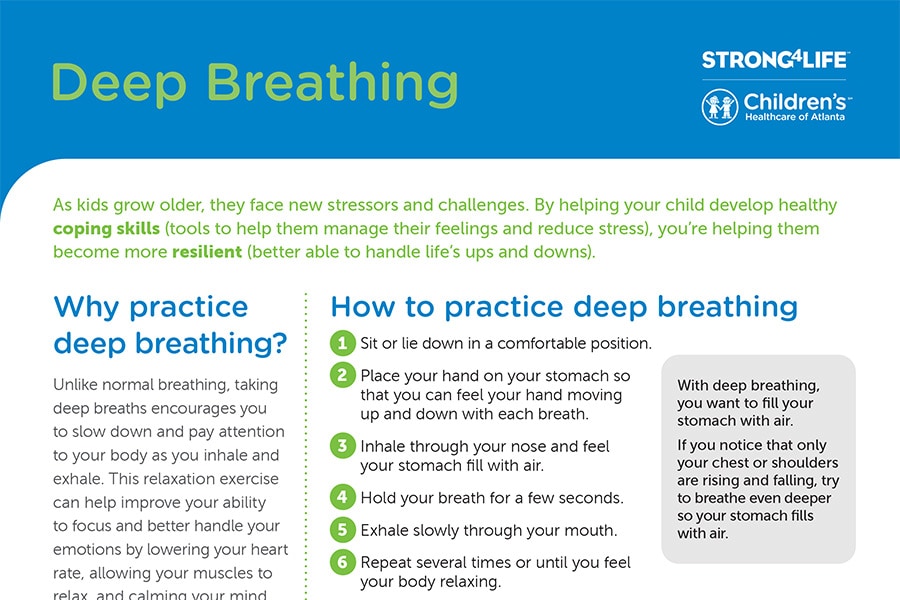
Take deep breaths together.
|
|
Create soothing sensory experiences. Soothing sensory experiences can help toddlers cope with their feelings. |
|
Emotional regulations skills for preschoolers
Preschoolers are beginning to understand feelings and can practice simple self-regulation but still rely heavily on adults for support. Here are some emotional regulation skills you can try with your preschooler.
| Strategies | Skills |
|---|---|
|
Provide clear, consistent limits. Limits can help preschoolers begin to learn how to express their feelings in safe ways. |
|
|
Practice expressing and managing feelings in playful ways. Learning to label feelings will eventually help preschoolers learn how to handle those feelings. |
|
|
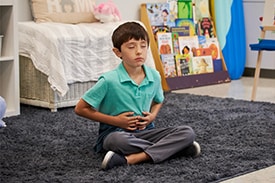
Set up a calming corner. A calming corner gives kids a safe space to go when they need to take a break or practice coping skills. |
|
Emotional regulation skills for grade schoolers
Children begin recognizing and using words to express more complex feelings, especially when adults continue modeling this practice. Here are some emotional regulation skills you can try with your elementary schooler.
| Strategies | Skills |
|---|---|
|
Communicate clearly, calmly and compassionately. When children feel heard and respected, they are more likely to share their feelings with you. |
|
|
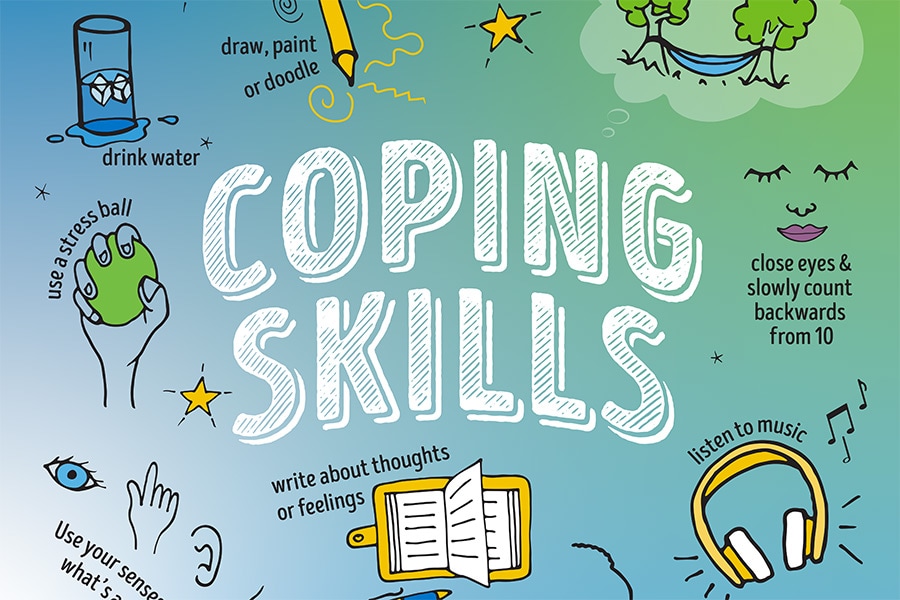
Promote emotional expression in creative ways. Art, music and writing offer a fun, safe way to express feelings and build emotional awareness. |
|
|
Encourage movement. Releasing energy can help children regulate their emotions and focus their attention. |
|
|
Play games together. Play teaches children how to handle winning, losing, frustration and excitement in a fun, low stakes setting. |
|
Emotional regulation skills for middle and high schoolers
For middle and high schoolers, the goal is to help them recognize which coping skills can help with specific emotions. Adolescents may begin using coping skills on their own when calm and when distressed. Here are some emotional regulation skills you can try with your middle or high schooler.
| Strategies | Skills |
|---|---|
|
Make the connection between thoughts, feelings and behaviors. This ability to start to notice the connection allows them to be more aware and make more mindful choices. |
Help them build awareness of their technology use:
|
|
Model decision-making and problem solving. Slowing down helps kids and teens make decisions from a more balanced, regulated state. |
|
|
Encourage coping skills as part of the daily routine. When these skills are used regularly it can help kids manage stress more proactively. |
|

Consistency over perfection
Modeling emotional regulation skills perfectly isn’t possible—no one is perfect. Instead, focus on practicing coping skills consistently with kids over time.
If your child is struggling to regulate their emotions, that’s OK. Coping skills for kids can take time to master. When in doubt, always trust your gut and consult a mental health professional if needed. Take any thoughts of suicide seriously. Call or text 988 if you or a loved one is experiencing thoughts of suicide, self-harm or any mental health crisis.