Bath Time Safety for Babies and Toddlers
Key takeaways:
- Drowning is the leading killer of kids ages 1 to 4.
- Keep young children within arm’s reach during bath time. Drowning—especially in tubs—happens quickly, is silent and can happen in as little as an inch of water.
- Gather all your supplies before the bath so you don’t need to leave your little one’s side.
- Drain the water and remove toys immediately after each bath.
In this article:

Bath time safety
Drowning is the leading killer of kids ages 1 to 4. It’s quick, silent and can happen in as little as 1 inch of water. And, while no one ever expects it to happen to them, it can happen to any of us. To keep kids safe, make these safety measures part of your family’s bath time routine:
- Gather any towels, shampoo, washcloths and other supplies before you start the bath. This way, there’s no reason to leave your child’s side while they’re in the bath.
- Once the water is running, keep babies and toddlers within arm’s reach. This is called “touch supervision.” Being able to reach out and touch your child is the best way to prevent drowning.
- Be sure you’re not distracted by checking notifications or watching content on your phone while your child is in the bath.
- Avoid using bath seats designed to help babies sit up in the tub—they can tip over easily. Try a baby bathtub, sling insert or reclining bath support if it makes bath time easier. Note: None of these devices are a substitute for supervision. Never leave your baby unattended if there is water in the tub.
- Run a shallow bath. We recommend filling the tub to your child’s waist. That’s usually about 2 inches of water for infants, and 4 to 6 inches for toddlers.
- Test the bath temperature. Use your wrist or elbow to make sure bathwater is warm, not hot. To be extra careful, set your water heater thermostat to 120°F.
- Install no-slip strips or use non-slip bath mats for the bottom of the tub to prevent falls.
- Remove toys after the bath so your child isn’t tempted to get back in the tub. Set them out to dry to avoid any buildup of mold or mildew.
- Drain the water immediately after each bath.
FAQ: Bathing newborns and infants
If you’re a first-time parent, or a little out of practice, start here with answers to common questions about bathing newborns and infants.
When do I give my newborn their first bath?
You can start bathing your baby as soon as you want, but remember not to get their umbilical cord stump wet until it has fallen off. Start with sponge baths. Once the umbilical stump falls off, you are ready to put your baby in the water.
How do I bathe a newborn in the tub?
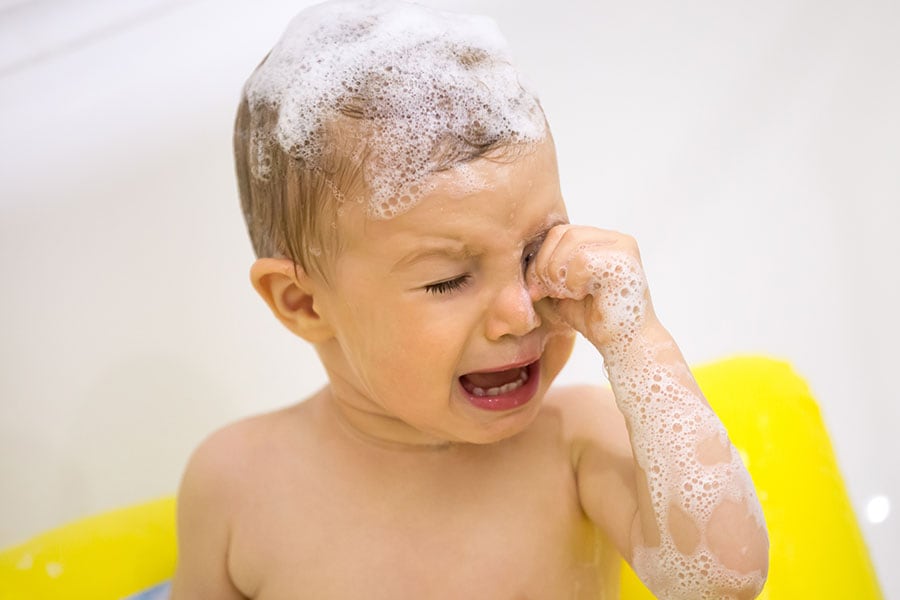
Clean babies gently. Similar to a sponge bath, use a soft washcloth to wash your baby’s face, neck and ears. Wash the rest of their body from the top down. Without scrubbing or tugging, massage their scalp. Cup your hand over their face to rinse soap or shampoo without getting it in their eyes. Once your little one is a toddler, you can also use a bath visor to keep water and soap out of their eyes.
How often do I bathe my baby?
Because babies don’t sweat or get dirty like older kids and grown-ups, they don’t need baths as often as we do. Their skin is very sensitive, so daily baths can cause dryness and irritation. If your baby enjoys baths and they’re a helpful part of your nightly routine, bathing daily with warm water is OK. Use shampoo, soap and other bath products as is necessary or appropriate for your child’s hair and skin health.
What is cradle cap, and how do I get rid of it?
Cradle cap is thick, flaky or scaly skin on your baby’s scalp. It’s really common, mostly harmless and tends to go away on its own. Cradle cap usually doesn’t bother babies, but if it’s severe, it can be irritating. Some household remedies include applying baby oil or mineral oil after a bath. During the bath, use gentle baby shampoos. For more severe cases, a prescription ointment or shampoo may be necessary. Talk with your pediatrician about any serious concerns.
Does bathing make eczema worse?
Certain soaps and too much time in warm water can make irritation worse. This can be especially true in winter, when the air is extra dry. If you notice irritation, try to limit your child's bath to less than 10 minutes, use lukewarm water, and wash soaps and shampoos off twice to ensure a thorough rinse. Contact your pediatrician for specific product recommendations.
How soon after circumcision can baby have a bath?
It’s important to ask your baby’s doctor for their recommendations, as each baby is different. Depending on the instrument used and what your doctor recommends, timelines for bathing after circumcision can vary.
When can my child bathe with an older sibling?
Wait until your little one can sit up without support to bathe them with older siblings. This can be a great time for siblings to have fun and bond. Just remember to never leave an older sibling alone in the bath with a younger sibling. Always actively supervise your baby during baths by keeping them within arm’s reach.
FAQ: Bathing toddlers and preschoolers
As your child grows, here are answers to common questions about bathing toddlers and preschoolers:
What soap or shampoo should I use for my toddler?
Use a gentle cleanser. Soap is too harsh for young children’s sensitive skin because it can cause dryness. Look for kid-friendly, mild cleansers that are free of perfumes or harsh chemicals. These will often be tear-free as well, to avoid irritating your toddler’s eyes.
Is bubble bath safe for toddlers?
While bubbles are certainly fun, we recommend waiting until your child is around 3 years old to use them. Before then, bubble baths can irritate little ones’ sensitive skin. Using tear-free and fragrance-free bubbles will limit irritation, but avoid bubbles altogether if your child has dry skin or eczema.
What do I do if my baby poops or pees in the bath?
It’s common and normal for babies and toddlers alike to pee or poop in the bath. So if it happens, don’t worry! Exposure to urine is not harmful, so you can either drain the bath or keep moving while being careful not to get water in your baby’s mouth. If your child poops in the tub, remove your child from the tub and drain the water. Remove the stool, clean the tub with soap and water, and start the bath again.
How can I make bath time fun for my toddler?
From toys to storytelling to making art on the walls of your tub, there are lots of ways to make bath time fun for your toddler. You can play music and sing, take make-believe adventures across the ocean, or use the rim of the tub as a racetrack for toy cars. Many of your child’s favorite toys, like action figures and dolls, are water-safe. Playing with their go-to toy may help to reduce bath time stress.
What bath toys are best for my toddler?
Try to avoid toys with holes that allow water in but make it difficult to get the water out, which can allow mold to grow. Dry toys thoroughly after each bath and leave them out to air-dry before tossing them back into their bin or cabinet. Also, remember to remove all toys from the tub when the bath is over so your toddler won’t be tempted to crawl back in unsupervised.
Can my child take a bath after their flu shot or other vaccinations?
Absolutely.
My child inhaled bathwater. What do I do?
With close supervision, it is very unlikely that your child will inhale enough water to be dangerous. However, if your child is submerged and suffers a choking event—involving coughing and respiratory distress, turning blue, or going limp after being submerged in water—seek medical care immediately.
When do kids start taking showers?
The transition from bath time to taking showers is up to you and your child. This typically happens around 6 to 7 years old, but as long as they are mature enough to be safe and wash themselves thoroughly, they’re ready for the switch!
If your child has an injury or is showing signs of illness, call your doctor or visit an urgent care center. If your child has a life-threatening injury or illness, is having trouble breathing or is unconscious, call 911 and/or visit an emergency department immediately.