Lakes and Freshwater Safety for Families
Water safety reminders:
- Drowning is typically silent, so active supervision is the most important thing you can do to keep kids safe.
- Designate at least one adult to be a water watcher.
- Keep beginner swimmers within arm’s reach, and keep experienced swimmers in sight at all times.
- Watch kids during transition points when they aren’t supposed to be in the water and drowning accidents are more likely.
- Avoid replacing active supervision or swimming skills with a life vest or puddle jumper.
In this article:
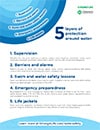

Active supervision in freshwater environments: lakes, creeks, rivers
To help prevent drowning and other injuries in freshwater environments, active supervision should always be the top priority. Unlike at most neighborhood pools, having a CPR-trained lifeguard present is less likely at the lake, creek or river. Visibility and swimming in open water is also more challenging due to its depth, currents and murkiness. That’s why supervising kids and teens is essential, especially in freshwater environments.
Ways to practice active supervision of kids and teens in freshwater environments:
- Keep close, constant watch. Supervising kids and teens means being able to recognize when they’re having trouble in the water and knowing how, when and who to call for help.
- Make kids swim with a buddy. This makes it more likely that someone will see an incident as quickly as possible. Depending on the situation, the buddy can step in to support or call for help.
- Monitor kids playing in the water without reading, texting or scrolling. If socializing, be sure to face the direction of where the children are swimming.
- Choose a water watcher: a responsible adult who agrees to constantly supervise kids when in and around water without distractions.
- Take shifts with other water watchers when supervising to avoid exhaustion and distractions.
- Confirm another trusted adult is taking over responsibility for supervising rather than assuming someone else is watching. Ask them directly, “Are you watching Bryce? I need to run to the car.”
- Watch kids during transition points (periods of time when they aren’t supposed to be swimming) when drowning accidents are more likely.
- Stay close enough to less experienced swimmers to reach out and grab them if needed. Always keep an eye on stronger swimmers.
- Do not put older kids in charge of younger kids around water. Even if they’re a strong swimmer, little ones should always be supervised by an adult.
Learn more about supervision and other ways to protect kids and teens in and around water.

Freshwater safety reminders
Before kids and teens swim in a lake, creek or river, keep these freshwater safety tips in mind:
- Talk about risk-taking behavior. Older kids and teens are more likely to drown in open water because they’re taking risks. Risky behaviors include jumping and diving, swimming or boating at night, and swimming while under the influence of alcohol or drugs. Peer pressure plays a part. Talk to your child about how certain behaviors can be life threatening. Empower them to make the right decisions under pressure.
- Encourage kids and teens to be honest about their swim skills. There’s no shame in not knowing how to swim, and it’s never too late to learn. If your child isn’t a strong swimmer, encourage them to be open about their skills with their peers and other adults so they can be properly monitored.
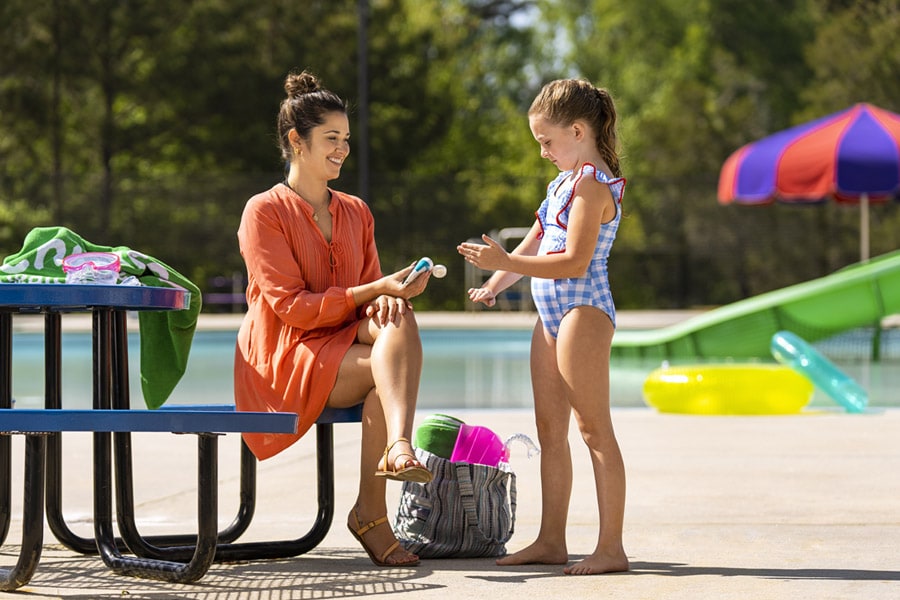
- Protect their skin and eyes from sun exposure with sunscreen and protective sun gear. Learn more about sun safety for kids of all ages.
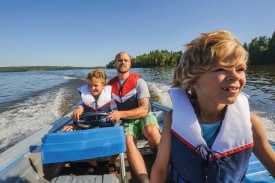
- Wear a U.S. Coast Guard (USCG) tested and approved life vest in or around open water and when boating, tubing or if other safety measures (e.g., lifeguards) aren’t in place. Wear a life vest and helmet if going on a river with rapids.
- Wear a life vest and helmet if going on a river with rapids.
- Check your lake, creek or river for its water cleanliness before swimming or boating. You can visit the Environmental Protection Agency’s site for more information.
- Make sure kids check the swimming area for hazards. In addition to looking for posted warnings, they should check for dangerous items, like tree stumps and debris.
- Watch out for inclement weather. Exit the water if there’s a storm. Take extreme caution if you hear thunder or see lightning.
- Stay aware of, and clearly visible to, boaters and other watercraft operators if you’re in a lake or river.
- Teach kids to enter the water feet first. Diving headfirst can lead to spinal injury or death.
- Swim in designated swimming areas whenever possible.
- Avoid swimming near moving boats, boat docks and boat launching ramps.
- Avoid swimming or floating near a boat’s exhaust outlets as there’s a risk for carbon monoxide poisoning.
- Look around for fish, snakes, poisonous plants and other dangerous aquatic life before swimming in open water. Read these tips on preventing bad experiences with bugs, snakes and plants to learn more.
- Avoid open water areas with large waves or dangerous currents. Teach kids and teens how to read posted signage and flags for warnings.
- If caught in moving water, don’t fight directly against the current. Swim diagonally toward the water’s edge.
- Be aware of rising water. If the body of water is part of a dam system, be aware of schedules and have an exit plan. If it recently rained or starts to rain, be aware and have a plan.
- Don’t mistake flotation for safety. Tubes and rafts can pop or float away, so strong swimming skills are still crucial for kids to go tubing.
- Set a “checkpoint” and check-in times. Pick a spot to meet up if you get separated, or a time for your child to call you and check-in if you’re not with them.
If your child has an injury or is showing signs of illness, call your doctor or visit an urgent care center. If your child has a life-threatening injury or illness, is having trouble breathing or is unconscious, call 911 and/or visit an emergency department immediately.